Temperature records
Capture readings at the sensor location over time.


INDUSTRIES WE SERVE
Temperature affects product quality, operational continuity and customer trust. Thermologix connects readings to the people responsible for protecting them.
Illustrative industry scene.YOUR TEMPERATURE INTELLIGENCE PARTNER
Your team needs to know what happened, where it happened and what to do next.
From medicine storage to produce distribution, NanoTag and ThermoCloud bring together local temperature measurements, wireless connectivity and accessible reporting. Build a monitoring approach around your goods, locations and operating responsibilities.
EXPLORE YOUR INDUSTRY
Explore recommended applications. Device suitability, placement and connectivity are assessed for each deployment.
 01
01Protect temperature-sensitive medicines throughout storage and distribution.
Explore application ↗ 02
02Help healthcare teams see conditions around the supplies they rely on.
Explore application ↗ 03
03Keep freshness and product integrity in the picture.
Explore application ↗ 04
04Know more about conditions between dispatch and receipt.
Explore application ↗ 05
05Give storage teams a shared view of the environments protecting inventory.
Explore application ↗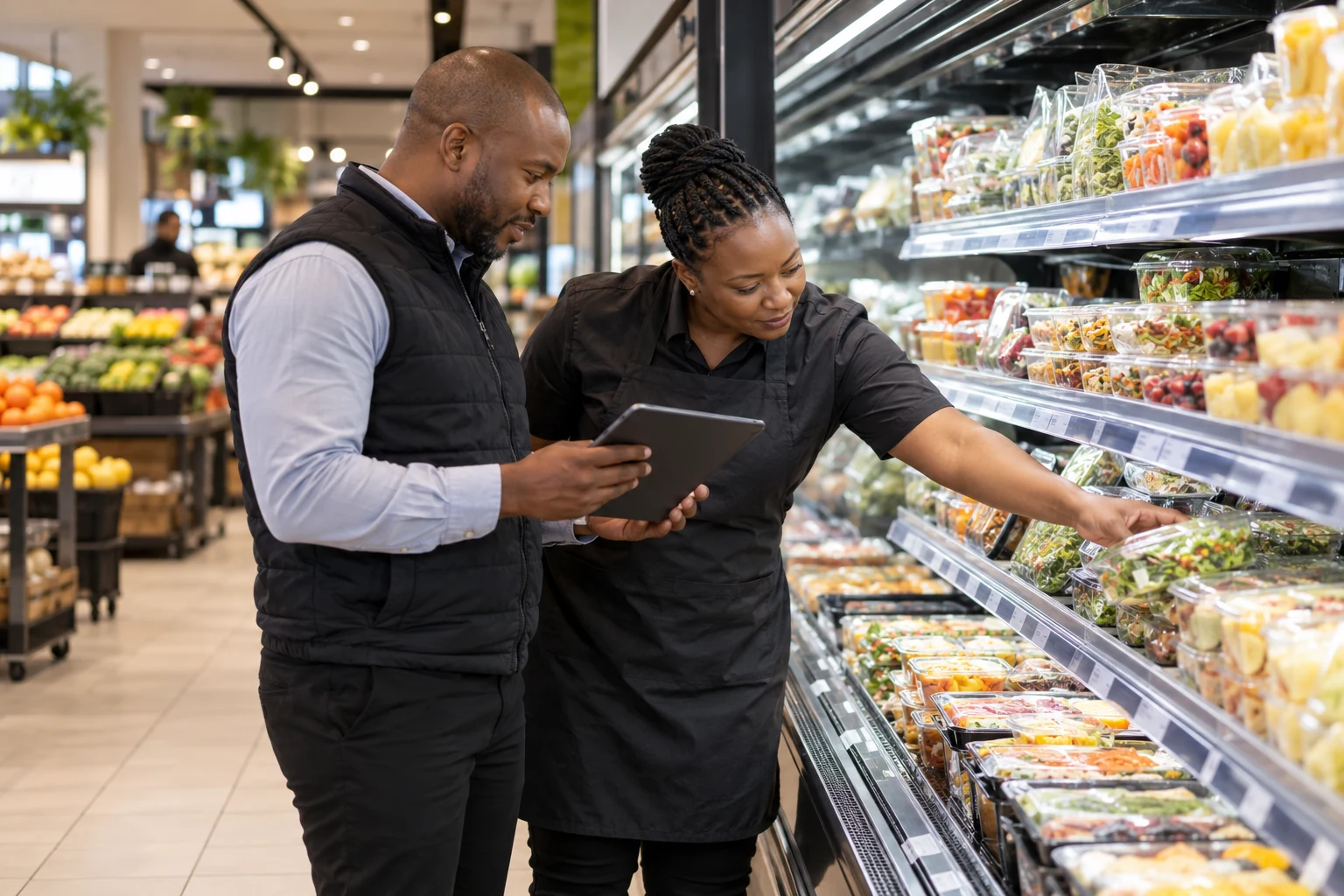 06
06Help branch teams stay informed about temperature-sensitive stock.
Explore application ↗ 07
07Understand the conditions your produce experiences after harvest.
Explore application ↗ 08
08Bring temperature visibility to sensitive materials and research storage.
Explore application ↗Industry photography is illustrative and does not depict actual Thermologix clients or deployments.
ONE CONNECTED MONITORING ECOSYSTEM
A small sensor at the monitoring point. A wireless path to the platform. A clearer picture for your team.
Temperature intelligence from the source to the responder.
Explore the architecture ↗Capture readings at the sensor location over time.
Transmit through available LoRaWAN gateways.
Notify designated users about configured threshold breaches.
Review graphs and download available reports.
Retain recorded samples; confirm recovery behaviour for your revision.
Manage devices and give teams appropriate platform access.
SEE THERMOLOGIX IN ACTION
Explore the operational challenge, the monitoring approach and the value for your team.
PROTECTING PRODUCT INTEGRITY
Clearer temperature evidence for product-quality assessment, supplier discussions and storage oversight.
Medicines can encounter changing conditions during handling, holding and transport. Quality teams need a record of the temperature at the monitored point to investigate deviations.
NanoTag records temperatures at an agreed location. LoRaWAN carries received readings to ThermoCloud, where teams review history, configure limits and access reports.
A temperature-sensitive shipment arrives after a loading delay. The quality team reviews available readings alongside delivery records and assesses the goods under its approved procedure.
Confirm product-specific limits, required accuracy, calibration evidence and the appropriate monitoring interval.
CONFIDENCE IN CRITICAL STORAGE
Better information for storage supervision and a clearer basis for investigating an excursion.
Hospitals and clinics may manage temperature-sensitive medicines and materials across several locations. Each monitoring point needs a clear owner and a response route.
Use NanoTag at suitable storage points and ThermoCloud for shared device visibility, configured notifications and temperature histories.
A dispensary receives an excursion notification. The responsible person checks conditions, follows the stock-protection procedure and provides the recorded history to the authorised reviewer.
Assess the specific materials and programme requirements. A sensor record alone does not determine suitability for clinical use.
QUALITY FROM PRODUCTION TO DELIVERY
More informed quality investigations and better visibility into recurring temperature issues.
Temperature changes during storage and handling can create quality concerns. Teams need to understand the conditions recorded and compare them with product and process requirements.
Monitor suitable locations, set relevant thresholds and review received readings and reports in ThermoCloud alongside the organisation’s food-quality records.
A chilled-store team notices repeated excursions during busy loading periods. They compare the temperature history with handling records and investigate refrigeration, airflow and access practices.
A local environmental reading is not automatically a food-core measurement. Use approved food-quality procedures to assess affected goods.
VISIBILITY BEYOND THE WAREHOUSE
A clearer record of monitored conditions for carriers, customers and quality teams.
A consignment passes through loading bays, vehicles and receiving teams. Connectivity and responsibility may change along the route.
Plan sensor placement and LoRaWAN coverage for the journey. Review available readings in ThermoCloud and use temperature histories to support handover investigations.
A receiving team questions conditions after a delayed delivery. Available readings help identify the period requiring review; any data gaps remain explicit in the assessment.
Confirm route coverage and how buffered readings are retrieved. GPS tracking, cellular fallback and automatic backfill are not established by the supplied material.
TEMPERATURE VISIBILITY AT SCALE
Improved oversight of selected storage points and temperature evidence for maintenance and quality reviews.
Rooms and storage zones can have different conditions. A single reading does not describe every shelf, pallet or corner of a facility.
Choose suitable monitoring points, bring devices into ThermoCloud and configure limits and notification recipients for each operational requirement.
A warehouse team investigates an excursion at a selected monitoring point. They compare recorded conditions with loading and maintenance activity before deciding on corrective action.
Use qualified placement and mapping where required. Match the measurement range and accuracy to the intended storage conditions.
SUPPORTING PRODUCT QUALITY IN STORE
Clearer storage information for branch supervision and investigation of refrigeration issues.
Stores manage receiving areas, back-room storage and refrigerated displays. An issue may develop between manual checks or outside normal trading hours.
Install at suitable monitoring positions and give designated teams access to received readings, configurable notifications and downloadable reports.
A store receives an out-of-hours notification. A named responder checks the relevant storage area and follows the store’s product-assessment and escalation process.
Agree primary and backup responders. Notification delivery depends on reporting, network connectivity and app availability.
PROTECTING VALUE AFTER HARVEST
Better visibility into monitored post-harvest conditions and useful evidence for quality discussions.
Handling, holding and distribution expose produce to different environments. Commodity requirements and the placement of each sensor matter.
Record temperature at selected packhouse, storage or shipment points and review the available history with handling and distribution records.
A packhouse reviews temperature history after a quality query. The team considers the commodity, handling times and monitored conditions together before deciding what to improve.
Set limits for the commodity. Temperature monitoring does not measure freshness directly or guarantee remaining shelf life.
SUPPORTING CONSISTENT STORAGE CONDITIONS
Supporting information for material-storage review and investigation of deviations.
Samples, reagents and materials can have defined storage requirements. An excursion may require review by the person responsible for that material.
Assess NanoTag suitability for selected storage points, configure appropriate limits and use ThermoCloud to review readings and available temperature history.
A research team reviews an excursion at a monitored material-storage point. They use the recorded history alongside material requirements and the laboratory’s authorised assessment process.
NanoTag’s published range is −30°C to +60°C. Ultra-low or cryogenic storage needs a separate device-suitability assessment.
These are illustrative workflows, not documented customer case studies. Your authorised teams own product assessment and corrective decisions.
FROM DATA TO OPERATIONAL VALUE
Give quality teams temperature evidence to consider alongside product requirements and handling records.
Pair configurable notifications with named owners, backup contacts and a practical response procedure.
Review available temperature histories with your operational records to investigate recurring changes.
LET’S TALK ABOUT YOUR OPERATION
Tell us about your products, required conditions, monitoring locations and network connectivity. Let’s explore an approach suited to the way your organisation works.